Google with Nvidia to Revolutionize Quantum Computing
Google Quantum AI is utilizing Nvidia's CUDA-Q platform and Eos supercomputer to drive advancements in quantum computing technology.
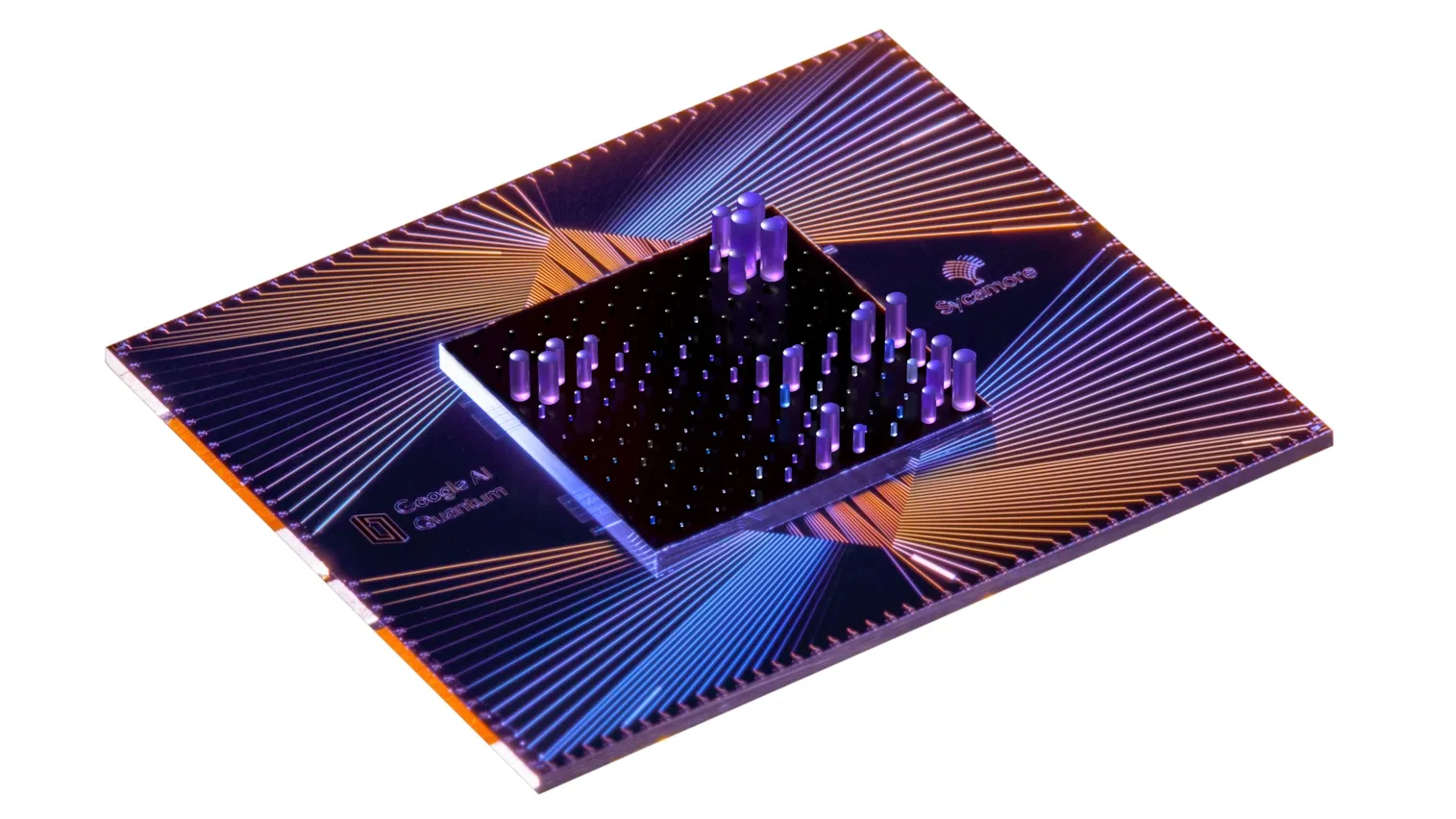
This collaboration is a significant step toward overcoming key challenges in quantum hardware, particularly the issue of “noise,” which limits the number of quantum operations a processor can perform before it fails.
Guifre Vidal, a research scientist at Google Quantum AI, highlighted the importance of this partnership:
“The development of commercially viable quantum computers hinges on scaling up quantum hardware while managing noise. Nvidia’s accelerated computing is helping us explore these noise implications in increasingly complex quantum chip designs.”
The CUDA-Q platform allows for dynamic simulations of quantum devices, enabling researchers to delve into how noise affects quantum hardware.
Previously, such simulations were prohibitively expensive and time-consuming. With CUDA-Q, what once took weeks can now be achieved in minutes, significantly accelerating research and innovation.
Nvidia also announced that the software powering these simulations will be made publicly available through the CUDA-Q platform, enhancing accessibility for researchers and developers worldwide.
“GPU-accelerated simulations are critical to advancing quantum computing,” said Tim Costa, director of quantum and HPC at Nvidia. “Google’s use of CUDA-Q underscores the essential role AI supercomputing plays in solving real-world challenges with quantum computing.”
Harnessing Quantum Mechanics
Quantum computers, unlike classical systems, exploit the principles of quantum mechanics such as superposition and entanglement.
This enables them to perform complex computations far beyond the reach of traditional computing, opening up transformative possibilities in fields like artificial intelligence, materials science, financial modeling, cryptography, and medicine.
For instance, quantum-AI integration could power breakthroughs in drug discovery, allowing scientists to simulate complex molecular interactions in ways that were previously unattainable.
Similarly, quantum computing's ability to optimize large-scale systems could revolutionize logistics and supply chain management.
Recognizing this potential, Google Quantum AI has actively invested in initiatives to demonstrate quantum computing's practical utility.
In March, Google partnered with XPRIZE and GESDA to launch the XPRIZE Quantum Applications competition, a three-year, $5 million global challenge to address real-world problems using quantum computing.
This competition aligns with Google’s broader mission to develop large-scale, error-corrected quantum computers and applications that can redefine industry standards.
The integration of Nvidia’s CUDA-Q platform into Google’s quantum research reinforces the synergy between AI and quantum computing, a partnership poised to unlock unprecedented advancements across technology, science, and industry.