Over six years ago, NVIDIA unveiled its revolutionary image enhancement and upscaling technology, Deep Learning Super Sampling (DLSS). Fast forward to today, the latest iteration, DLSS 4, was announced at CES 2025.
With promises of exponential improvement since its debut with the GeForce 20 Series, DLSS 4 represents a culmination of years of continuous learning and innovation. But have you ever wondered how NVIDIA has achieved such remarkable progress?
As it turns out, the secret lies in the relentless work of a massive NVIDIA supercomputer—operating around the clock to perfect DLSS.
Role of AI and Supercomputers in DLSS
At CES, Bryan Catanzaro, NVIDIA’s VP of Applied Deep Learning Research, shed light on the extensive efforts behind DLSS advancements.
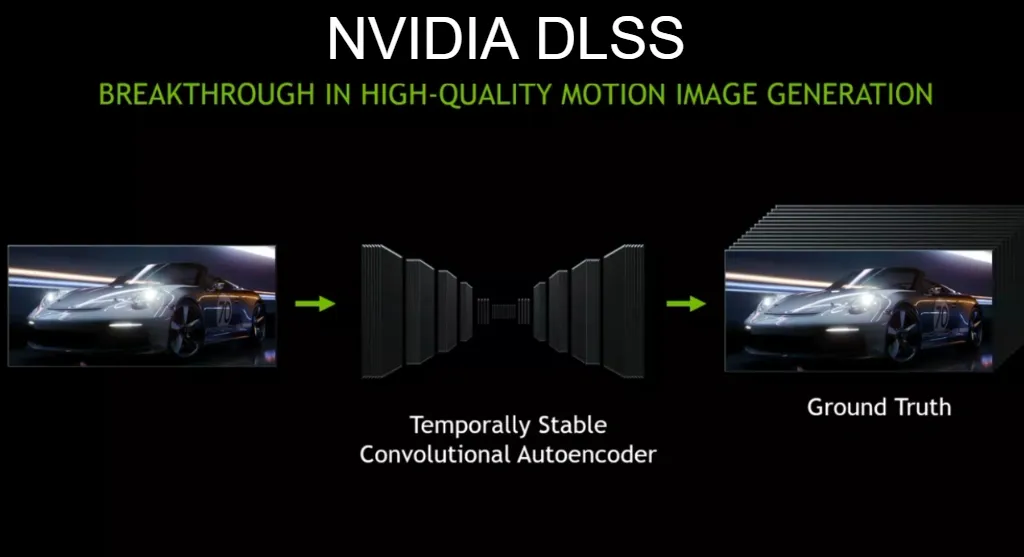
For six years, NVIDIA’s supercomputer, equipped with thousands of state-of-the-art GPUs, has run 24/7, 365 days a year, with the sole mission of enhancing DLSS.
How the Training Process Works
The process is centered on analyzing failures. When a DLSS model underperforms, it typically manifests as:
-
Ghosting
-
Flickering
-
Blurriness
When these issues are detected, NVIDIA investigates the cause, identifying the specific scenarios where the model made incorrect decisions. The insights from this analysis guide improvements in the training dataset.
The improved dataset is then used to retrain the DLSS model. After retraining, the updated model undergoes rigorous testing across hundreds of games to ensure its effectiveness. This cycle of analyze, retrain, and test has been the foundation of DLSS development since its inception.
DLSS 4 and the RTX 50 Series
DLSS 4 was launched alongside NVIDIA’s next-generation RTX 50 Blackwell GPUs. According to NVIDIA, these GPUs deliver unprecedented performance, with the RTX 5070 ($549) matching RTX 4090 levels when DLSS 4 is enabled.
Performance Benchmarks
NVIDIA shared some impressive preliminary performance figures:
-
RTX 5090: Approximately 30% faster than the RTX 4090 without DLSS.
-
RTX 5080: Around 15% faster than the RTX 4080.
-
RTX 5070: Up to 20% faster than the RTX 4070.
These benchmarks highlight significant performance gains, but it’s worth noting that they are based on NVIDIA’s internal testing. Independent benchmarks closer to the launch will provide a clearer picture of real-world performance.
Why DLSS 4 Matters
DLSS 4 represents a major leap in AI-driven image enhancement, enabling:
-
Sharper visuals: Reduced ghosting and flickering for a more immersive gaming experience.
-
Higher performance: Enhanced frame rates without compromising image quality.
-
Broader game support: Continuous testing across hundreds of titles ensures compatibility and optimization.
With these advancements, DLSS 4 is set to redefine the gaming landscape, empowering gamers to experience next-level visuals and performance without needing top-tier hardware.
End Note
The development of DLSS has been a relentless six-year journey of innovation, powered by NVIDIA’s innovative AI research and supercomputing capabilities.
DLSS 4, paired with the RTX 50 Series, embodies the culmination of these efforts, promising transformative improvements in gaming performance and quality.
As the RTX 50 Series launch approaches, the gaming community eagerly awaits independent reviews to validate NVIDIA’s claims. If the preliminary benchmarks hold true, DLSS 4 could mark a new era for AI-powered gaming technology.