Google’s Quantum AI team has revealed Willow, a groundbreaking quantum computing chip that not only corrects errors exponentially but also processes certain computations far faster than even supercomputers, surpassing known timescales in physics.
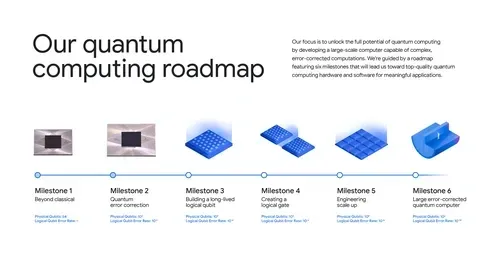
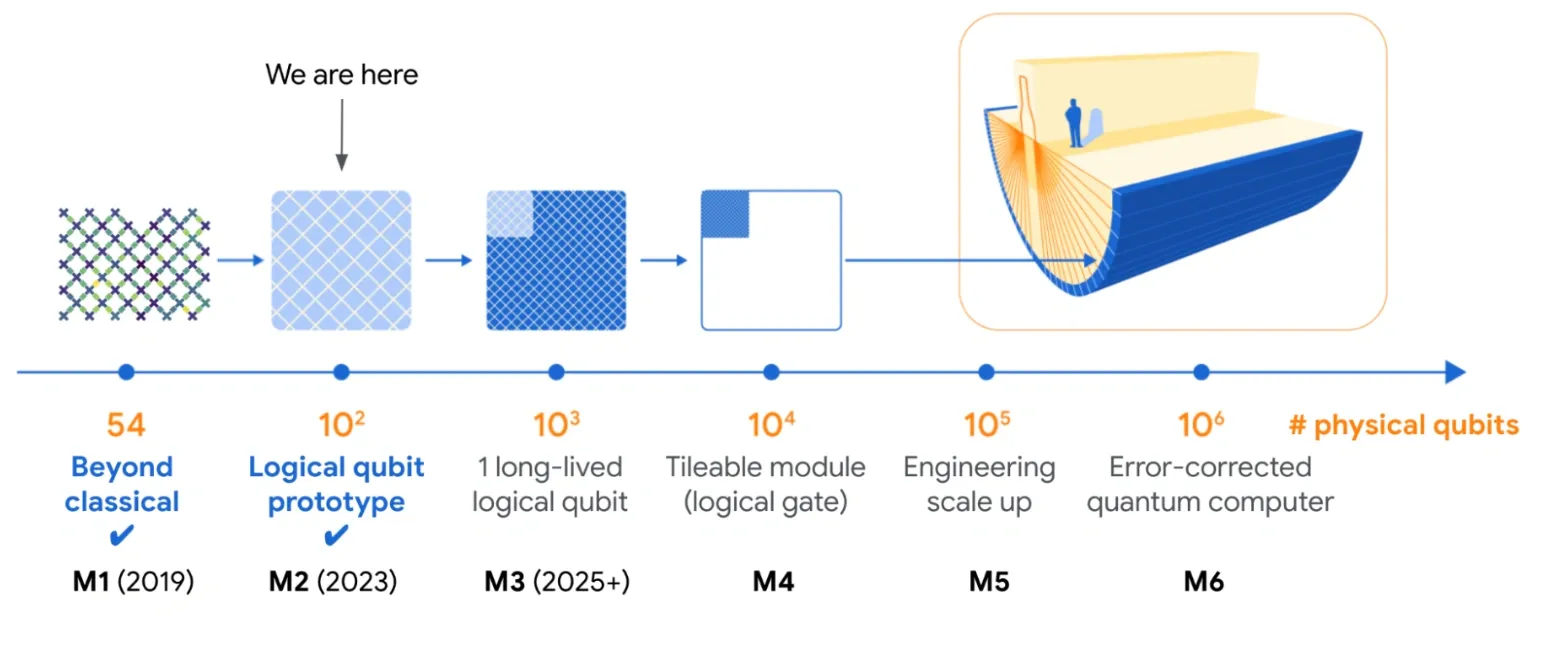
This marks a significant achievement in the journey toward creating a reliable quantum computer, with the potential to unlock new realms of human knowledge.
Quantum computing represents a radical shift from classical computing, where the language of quantum mechanics is harnessed to overcome the limitations of traditional systems.
1. Quantum Computing vs Classical Computing
Quantum computing introduces an entirely new paradigm. Classical computing relies on binary "bits" that represent either 0 or 1, powering everything from basic devices to complex data centers.
Quantum computing, however, uses "qubits" that can exist in multiple states simultaneously, unlocking unprecedented computational power.
2. The Power of Qubits
Qubits are the fundamental units of quantum computing, governed by the principles of quantum physics.
Unlike classical bits, qubits can exist in superposition, meaning they can represent both 0 and 1 at the same time.
When multiple qubits are entangled, they can represent numerous combinations of states (00, 01, 10, 11), exponentially increasing computational capacity and enabling quantum computers to solve complex problems far faster than classical systems.
3. Crafting Qubits: The Quantum AI Team's Approach
Creating quantum chips is a highly specialized process. Unlike classical chips, which are mass-produced, Google’s Quantum AI team fabricates its qubits in-house using superconducting integrated circuits.
Through a precise manufacturing process involving superconducting metals, capacitance, inductance, and Josephson junctions, they build high-quality qubits that are integrated into large, intricate quantum devices.
4. Mitigating Noise: Protecting Quantum Computers
Quantum computers are highly sensitive to external disturbances, or “noise,” such as electromagnetic fields and cosmic radiation.
To shield qubits from these influences, Google’s Quantum AI team designs special packaging that protects the qubits while maintaining their connection to the external world.
This requires advanced engineering, including material selection and careful design of the device’s structure to reduce noise and ensure quantum fidelity.
5. Wiring: Ensuring Precise Control
Control of quantum systems involves sending microwave signals through wires that span from room temperature to ultra-cold conditions.
These wires are carefully selected to ensure efficient signal transmission with minimal interference.
Filtering mechanisms are incorporated to further protect qubits from external disturbances, enabling precise control over their operations.
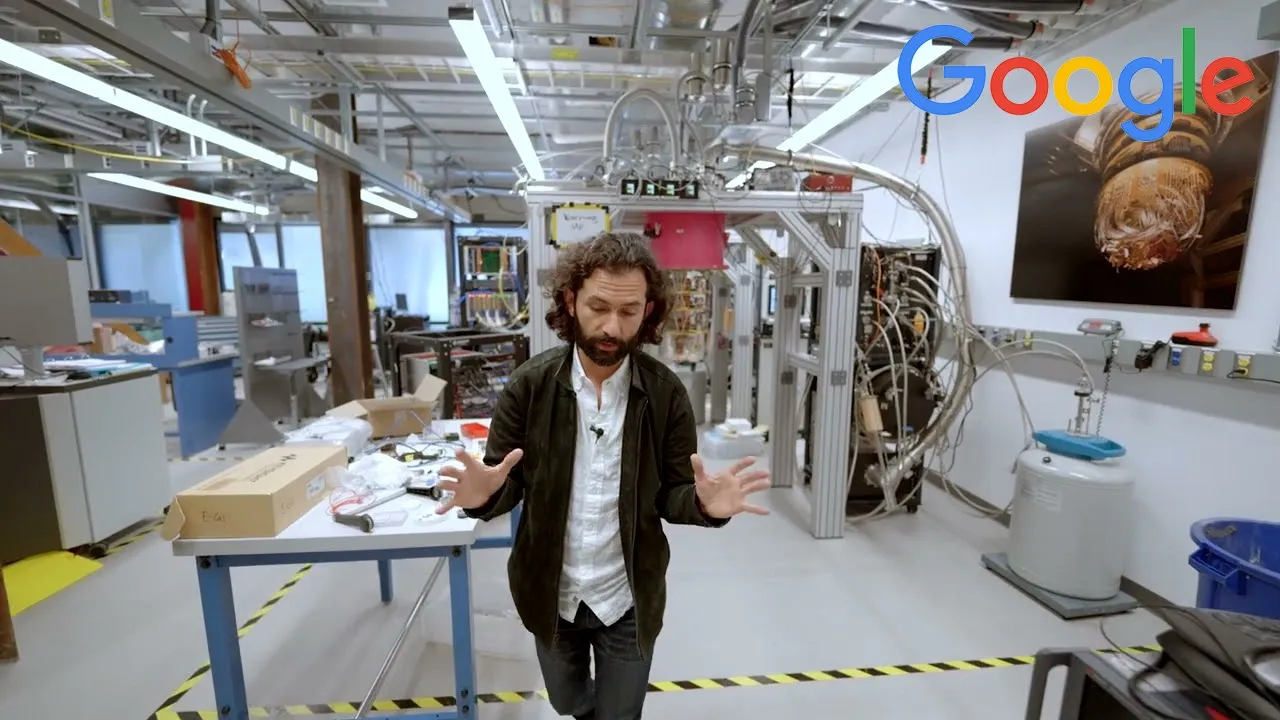
6. The Coldest Place on Earth: The Dilution Fridge
Superconducting qubits require frigid temperatures, colder than outer space, to function.
To achieve this, Google’s team uses a dilution fridge, a device that brings qubits to temperatures close to absolute zero.
At these extreme conditions, the qubits enter a zero-resistance state, allowing for optimal performance by minimizing thermal noise and maintaining the quantum properties necessary for complex computations.
By pushing the boundaries of quantum technology, Google’s Quantum AI team is unlocking the potential of quantum computing, opening new possibilities in fields like medicine, chemistry, and artificial intelligence.